LED Numeric Screens Enhance Safety in Industrial Warning Devices
Industry Background and Market Demand
Industrial environments demand high-visibility, real-time communication of critical data to ensure operational safety. Traditional warning systems, such as analog dials or basic indicator lights, often fall short in delivering precise numeric data under harsh conditions. LED numeric screens have emerged as a reliable solution, offering superior brightness, durability, and readability.
The market for industrial warning devices is expanding due to stricter workplace safety regulations and the increasing automation of manufacturing processes. Industries such as oil and gas, chemical processing, and heavy machinery require fail-safe systems that minimize human error. LED numeric displays meet this demand by providing instant, unambiguous feedback on parameters like temperature, pressure, and equipment status.
Core Technology: How LED Numeric Displays Work
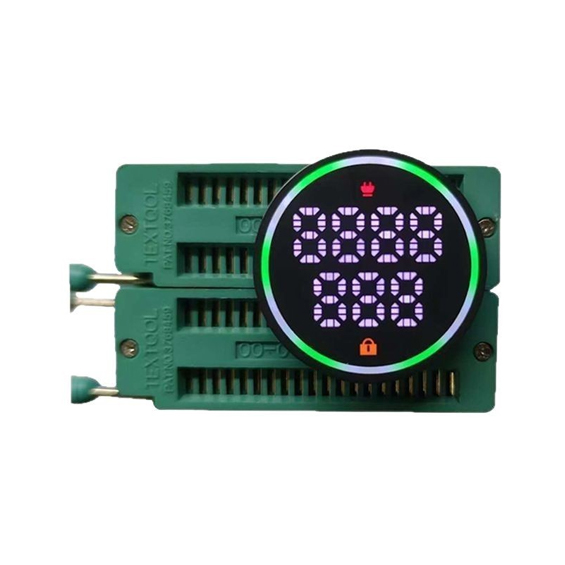
LED numeric screens utilize light-emitting diodes (LEDs) arranged in segmented patterns to form digits. Unlike LCDs, LEDs are self-illuminating, ensuring visibility in low-light or high-glare environments. Key advantages include:
- High Brightness: LEDs produce intense light output, making them readable from long distances.
- Low Power Consumption: Energy-efficient compared to incandescent or fluorescent alternatives.
- Fast Response Time: Updates in milliseconds, critical for real-time monitoring.
- Wide Operating Range: Functions reliably in extreme temperatures (-40°C to +85°C).
Advanced models incorporate multiplexing techniques to reduce power usage while maintaining display clarity. Some industrial-grade displays also integrate optical filters to enhance contrast under direct sunlight.
Product Structure, Materials, and Manufacturing
A typical industrial LED numeric display consists of:
- LED Segments: High-intensity diodes arranged in 7-segment, 14-segment, or dot-matrix configurations.
- Driver Circuitry: Microcontrollers regulate voltage and refresh rates to prevent flickering.
- Encasement: Robust housings made from polycarbonate or aluminum protect against dust, moisture, and mechanical stress.
- Interface Options: Supports RS-485, CAN bus, or 4-20mA inputs for seamless integration with control systems.
Manufacturing involves precision soldering of LED chips onto printed circuit boards (PCBs), followed by encapsulation in impact-resistant materials. Conformal coating is often applied to prevent corrosion from chemicals or humidity.
Key Factors Affecting Performance and Quality
Several variables determine the reliability of LED numeric screens in industrial settings:
1. Luminance and Viewing Angle – High-brightness LEDs (≥5,000 nits) ensure visibility in direct sunlight, while wide viewing angles (≥160°) accommodate multiple operators.
2. Environmental Resistance – IP65 or higher ratings are necessary for dustproof and waterproof operation.
3. Thermal Management – Efficient heat dissipation extends LED lifespan, especially in enclosed panels.
4. Power Supply Stability – Voltage fluctuations can cause dimming or premature failure; surge protection is critical.
5. Refresh Rate – A minimum of 60Hz prevents perceptible flicker, reducing eye strain during prolonged monitoring.
Supplier Selection Criteria for Industrial LED Displays
When sourcing LED numeric displays, manufacturers should evaluate:
- Compliance with Standards: Certifications such as UL, CE, and ATEX indicate adherence to safety and performance benchmarks.
- Customization Capabilities: Suppliers should offer tailored solutions for size, color, and communication protocols.
- Durability Testing: Accelerated life testing (e.g., 50,000+ hours MTBF) ensures long-term reliability.
- Supply Chain Transparency: Traceable component origins reduce risks of counterfeit parts.
Leading suppliers often provide engineering support for integration, including firmware customization and thermal simulation.
Common Challenges and Industry Pain Points
Despite their advantages, LED numeric displays face several challenges:
- Heat Dissipation in Enclosed Spaces – Poor ventilation can degrade LED performance over time.
- Electromagnetic Interference (EMI) – Industrial environments with heavy machinery may disrupt signal integrity.
- Cost vs. Lifespan Trade-offs – High-quality LEDs have a higher upfront cost but lower total cost of ownership.
- Legacy System Integration – Retrofitting older equipment may require additional signal converters.
Application Scenarios and Case Studies
1. Oil Refineries
In hazardous zones, LED numeric screens display real-time pressure readings, allowing operators to detect anomalies before equipment failure occurs. Explosion-proof variants (ATEX-certified) are mandatory in such environments.
2. Pharmaceutical Manufacturing
Cleanrooms use LED displays to monitor humidity and particulate levels, ensuring compliance with GMP standards. The absence of moving parts minimizes contamination risks.
3. Power Plants
High-voltage control panels integrate LED readouts for instantaneous fault diagnostics, reducing downtime during critical incidents.
Current Trends and Future Developments
1. Smart Displays with IoT Connectivity – Embedded sensors enable predictive maintenance by transmitting performance data to centralized dashboards.
2. Energy-Efficient Designs – Micro-LED technology reduces power consumption while maintaining brightness.
3. Augmented Reality (AR) Integration – Overlay displays provide contextual data via AR glasses for technicians in the field.
4. Flexible and Transparent LEDs – Emerging materials allow displays to conform to curved surfaces or be embedded in safety goggles.
FAQ: Common Questions About LED Numeric Displays
Q: How do LED numeric displays compare to LCDs in industrial settings?
A: LEDs outperform LCDs in brightness, response time, and temperature tolerance but may consume slightly more power.
Q: What is the typical lifespan of an industrial LED display?
A: High-quality LEDs last 50,000–100,000 hours, depending on operating conditions and thermal management.
Q: Can LED displays be customized for specific color requirements?
A: Yes, manufacturers offer red, green, blue, and amber LEDs to suit different warning protocols.
Q: Are there wireless options for remote monitoring?
A: Some advanced models support LoRaWAN or Zigbee for wireless data transmission.
Conclusion
LED numeric screens have become indispensable in industrial safety systems, offering unmatched visibility and durability. As industries adopt smarter, more connected solutions, these displays will continue evolving to meet the demands of modern automation. Manufacturers prioritizing quality, customization, and compliance will lead the market in delivering reliable warning devices.
 286315373@qq.com
 +86 18811889973





 Phone
Phone
Comment
(0)