LED Numeric Indicators Support Rapid Growth in Smart Home Appliances
Industry Background and Market Demand
The smart home appliance market is experiencing unprecedented growth, driven by increasing consumer demand for automation, energy efficiency, and real-time data monitoring. According to recent industry reports, the global smart home market is projected to exceed $300 billion by 2030, with appliances such as smart thermostats, refrigerators, and washing machines leading adoption.
A critical yet often overlooked component enabling this expansion is the LED numeric indicator. These compact, low-power displays provide essential feedback on appliance status, settings, and performance metrics. Unlike traditional segmented displays, modern LED numeric indicators offer superior visibility, durability, and integration flexibility—key requirements for next-generation smart devices.
Core Technology and Functionality
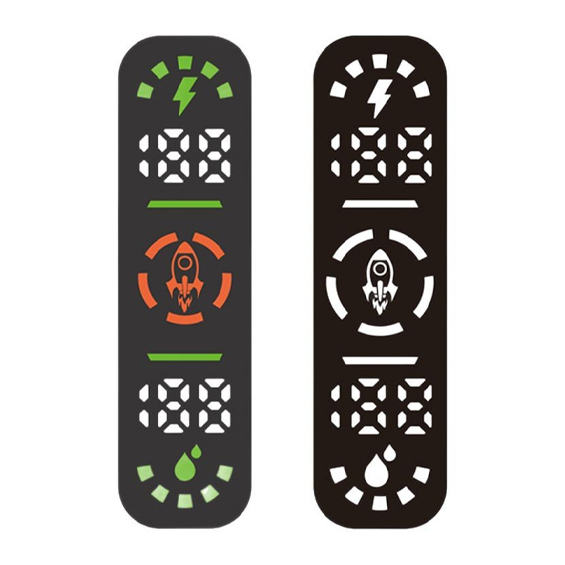
LED numeric indicators are seven-segment displays (or variations like 14- or 16-segment displays) that use light-emitting diodes (LEDs) to form alphanumeric characters. Their primary advantages include:
- High Brightness & Contrast – Ensures readability in varying lighting conditions.
- Low Power Consumption – Critical for battery-operated or energy-efficient appliances.
- Long Lifespan – Typically rated for 50,000+ hours, reducing maintenance needs.
- Compact Design – Facilitates integration into space-constrained appliance interfaces.
Advanced variants incorporate dot-matrix LED displays, allowing for dynamic symbols and basic graphics, which are increasingly used in premium smart appliances.
Product Structure, Materials, and Manufacturing
A typical LED numeric indicator consists of:
1. LED Chips – High-efficiency InGaN (for green/blue) or AlInGaP (for red/yellow) semiconductors.
2. Encapsulation – Epoxy resin or silicone for protection against moisture and thermal stress.
3. PCB Substrate – FR-4 or flexible PCBs for mounting and electrical connectivity.
4. Diffuser Lens – Enhances light uniformity and viewing angles.
Manufacturing involves precision surface-mount technology (SMT) assembly, ensuring consistent performance and durability. Some high-end models feature conformal coating to resist humidity and chemical exposure, making them suitable for kitchen and laundry appliances.
Key Factors Affecting Performance
Several technical and operational factors determine the reliability of LED numeric indicators in smart home applications:
- Thermal Management – Excessive heat degrades LED lifespan; proper heat dissipation is essential.
- Drive Current Stability – Inconsistent current leads to brightness fluctuations or premature failure.
- Environmental Resistance – Appliances in humid or high-temperature environments require IP-rated or hermetically sealed displays.
- EMI/RFI Shielding – Smart appliances with wireless connectivity must prevent electromagnetic interference.
Supplier Selection and Supply Chain Considerations
For manufacturers sourcing LED numeric indicators, key evaluation criteria include:
- Certifications – UL, RoHS, and REACH compliance for safety and environmental standards.
- Customization Capability – Suppliers should offer tailored solutions for brightness, color, and form factor.
- Production Scalability – Ability to meet fluctuating demand without compromising lead times.
- Testing Protocols – Rigorous burn-in and environmental stress screening (ESS) ensure field reliability.
Leading suppliers often provide value-added services such as optical design optimization and firmware support for seamless integration.
Common Challenges and Industry Pain Points
Despite their advantages, LED numeric indicators face several industry challenges:
- Compatibility with IoT Protocols – Displays must synchronize with Wi-Fi, Zigbee, or Bluetooth-based control systems.
- Cost Sensitivity – Price competition in the smart appliance market pressures component budgets.
- Legacy System Integration – Retrofitting older appliances with modern displays requires additional engineering.
- Power Efficiency Trade-offs – Higher brightness often increases power consumption, conflicting with energy-saving goals.
Applications and Use Cases
LED numeric indicators are integral to multiple smart home appliances:
1. Smart Thermostats – Display temperature, humidity, and scheduling data.
2. Refrigerators – Show internal temperature, energy usage, and maintenance alerts.
3. Washing Machines – Indicate cycle progress, water levels, and error codes.
4. Air Purifiers – Monitor air quality metrics (PM2.5, VOC levels) in real time.
In commercial settings, they are also used in HVAC control panels and industrial monitoring systems, where reliability is paramount.
Current Trends and Future Developments
Emerging innovations in LED numeric displays include:
- Ultra-Low-Power Designs – Leveraging micro-LED technology for next-gen smart appliances.
- Touch-Integrated Displays – Combining numeric indicators with capacitive touch for intuitive control.
- AI-Driven Adaptive Brightness – Automatically adjusting based on ambient light conditions.
- Sustainable Materials – Bio-based resins and recyclable components to meet eco-regulations.
As smart homes evolve toward predictive maintenance and voice-controlled automation, LED numeric indicators will continue to play a foundational role in user interaction.
FAQ
Q: Can LED numeric indicators be customized for different languages or symbols?
A: Yes, advanced dot-matrix and 16-segment displays support multiple character sets, including Cyrillic and Asian scripts.
Q: How do LED displays compare to OLED in smart appliances?
A: LEDs offer higher brightness and longer lifespan, while OLEDs provide better contrast and flexibility—each suits different use cases.
Q: What is the typical failure mode for LED numeric indicators?
A: Most failures result from prolonged thermal stress or moisture ingress, emphasizing the need for proper sealing and heat dissipation.
By addressing these technical and market demands, LED numeric indicators will remain a critical enabler of smart home appliance innovation.
 286315373@qq.com
 +86 18811889973





 Phone
Phone
Comment
(0)